While listening to the excellent Libero podcast, ‘Personality of the Year’ episode, I was struck by John Brewin describing Oliver Glasner as, ‘a person, he seems almost normal.’ Having followed Glasner as a Palace fan for coming up to two years, this did not particularly chime with my experiences.
With rumours circulating about Glasner’s future and the prospect of having his personality thrust into the unflinching limelight managing a big Premier League club entails, it is likely that the fog of managing at a relatively unfashionable club will be shed and we will be hearing a lot about what makes Glasner Glasner.
Glasner on first glance is relatively softly spoken and has an almost boyish face that would not look out of place as perhaps a kindly shopkeeper in one of the lighter Grimm fairy tales.
To half watch a post-match interview, he is a slightly over earnest Teutonic middle manager whose door is always open, will have the appropriate number of beers at a work do before leaving and you suspect has some decidedly non-British views about appropriate levels of nudity. If you’d met Oliver Glasner’s family on a Costa Blanca beach, he’d patiently help you build a sandcastle that is beyond the wildest dreams of what can be achieved with a plastic bucket and spade.
All these things can be true, and yet Glasner is possibly the singularly most interesting person to be managing at the top level in football.
Glasner’s employment history is littered with the kind of explosive fall outs and shock and awe success, that would make the Latin temperaments of Antonio Conte and Jose Mourinho blush.
After graduating from the Red Bull tactical school of hard pressing and relentless direct forward looking football, Glasner embarked upon a successful if controversial career in Germany.
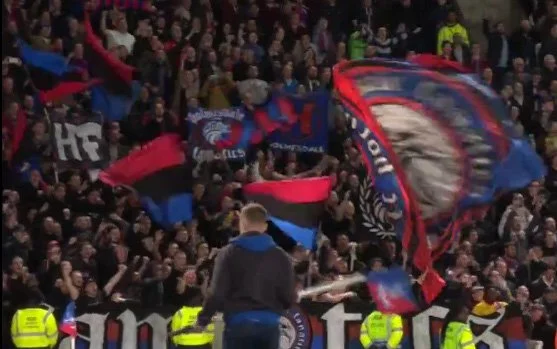
Upon leaving Wolfsburg in 2021, despite guiding the team to the Champions League in his second season, his own captain Joshua Guilavogui remarked, ‘I'm glad he's gone’.
He followed this up with a remarkable Europa League win at Frankfurt, before again leaving after a second season amidst arguments with the club hierarchy and press, notably shouting "Hört auf mit diesem Müll!" (Stop with this trash!) during a heated post-match press conference, causing a member of the club’s board to note, ‘It was neither right nor proper to react like that.’
A recurring theme of Glanser’s time at Palace, has been eyebrow raising criticisms of the club’s transfer policy followed by contrite statements in the days or weeks that follow. In Novembr 2025 Glasner stated, ‘When you play European football for the first time in your history let's invest instead of save. We saved and this is what we’re facing.’
He then subsequently clarified in January 2026, ‘I’m talking about [missing] five/six players. Nobody is to blame. I was quite harsh once and said we should have added one or two more players with all the circumstances. But I always look into the mirror and I should have had a better evaluation of the whole situation than I did in the summer. I always talk to the chairman and the board. I said that the size of the squad is enough.’
Who then, is Oliver Glasner. The softly spoken ‘normal one’ or short-tempered firebrand?
Glasner described himself in the following terms to Vienna daily newspaper Der Standard, ‘my greatest weakness is sometimes my greatest strength: my impatience and ambition can go in both directions…but success is like when you eat a piece of chocolate and you think: that's good, I want more.’
It is this impatience and ambition that defines Glasner as a manager.
It is impossible to resist the temptation when looking at the personality of Glasner to not consider the impact of the brain haemorrhage he suffered in 2011 that ended his football career. Glasner has been matter of fact in discussing this, explaining on the high performance podcast, ‘Over half those in his situation do not survive, often dying in their sleep. Glasner said: “When you're sleeping during the night the blood starts to expand, and you don't wake up anymore.’
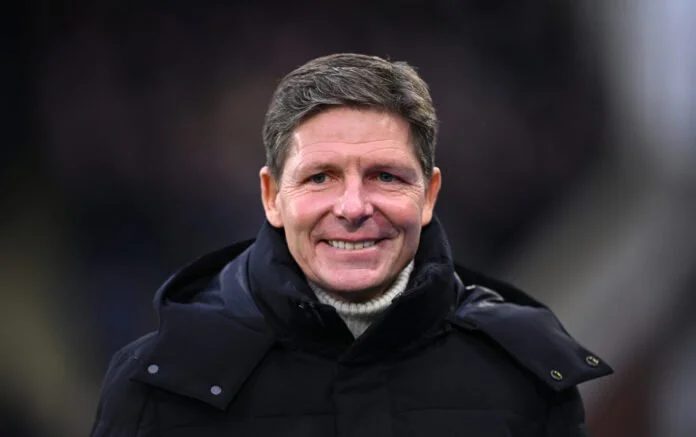
After his subsequent recovery, Glasner has built an enviable career based on hard work and relentlessly unyielding trust in himself and his methodology. The conclusions here write themselves. Glasner however appears to have developed this mentality from a much earlier time. He considers this mentality in the proposal to his wife, ‘There was a girl – ‘do I speak to her or not?’ I spoke to her and she’s now my wife and we’ve been together for 30 years. It was the decision I took, and it influenced my life.’ It is notable that Glasner had obtained an economics degree alongside his football career prior to his injury. Self-improvement and self-awareness does appear to be a big part of Glasner’s life. Glasner has outlined in Wolfsburger Allgemeine Zeitung ‘I’ve been working with a personality developer for 25 years. We always say: it comes as it comes – and that’s right.’ This can be further illuminated in his own reflections, ‘sometimes I have to be careful – I’m so ambitious – that it’s not too much for my environment, to demand too much too quickly. ‘This happened in every single club, and then I apologise.’
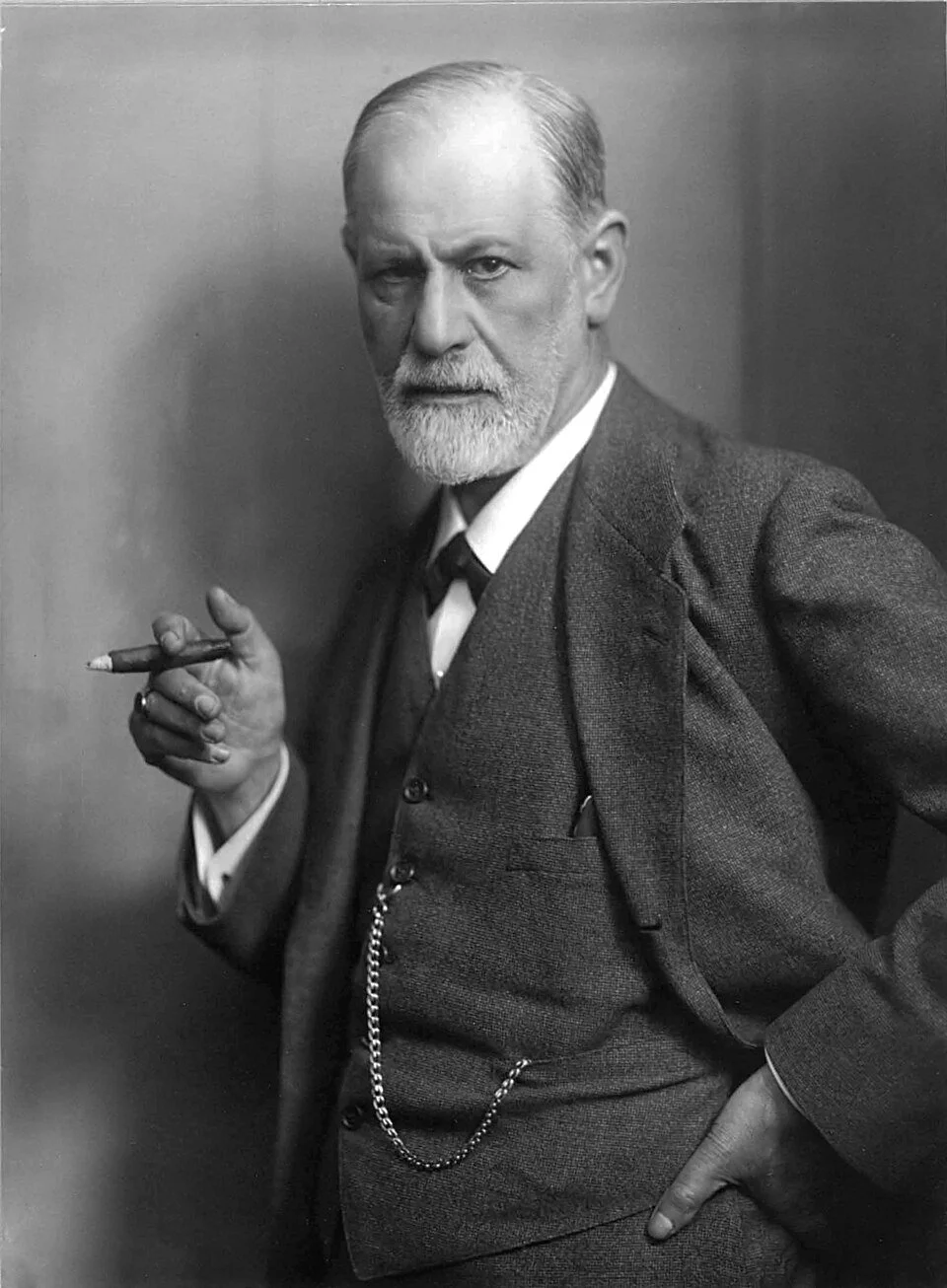
The inference you get from listening to Glasner speak and following his career, is that there is a remorseless single-minded focus within him that drives his success that he also needs to fight to control. This explains the slightly unpredictable and contrasting nature of Glasner’s presentation. A slightly clumsy interpretation of Glasner’s compatriot, Sigmund Freud’s concepts of the id and ego are useful in this sense. Freud compared the ego, in its relation to the id, to a man on horseback: the rider must harness and direct the superior energy of his mount, and at times allow for a practicable satisfaction of its urges. The ego is thus "in the habit of transforming the id's will into action, as if it were its own.’
Glasner’s career can thus be seen in this light. His ambition, singlemindedness and focus is the horse, or id that drives his success. He is however in a constant battle to harness and control this effectively. Glasner’s softly spoken nature and deliberate speech patters we often see are him in control. Conversely he utilises his ambition to control this inbuilt drive. Glasner attempts to be active in self reflection and seeking out measures to control his id.
What does this mean in football terms? The criticisms Glasner is likely to face moving forward are that of tactical inflexibility, inability to adapt to players who do not fit his vision and hyper short termism. Glasner’s ‘id’ has his way of playing and is ruthlessly committed to this. He is focused and unaccommodating of anything that deviates from this. Glasner can be uncompromising to any player who he feels cannot be trusted to follow his instructions sufficiently. This can lead to a lack of rotation and young players being left by the wayside.
What Glasner has learnt tactically emanates from another Austrian icon, Red Bull. Glasner came of age as a coach in the Red Bull model of frenetic pressing, wide open spaces and direct forward passes. He was given his first role in coaching by the guru of modern pressing, Ralf Rangnick. It is this blueprint that forms that basis of his single minded style of play.
In practical terms this focus can also mean a lack of adaption in tactics. So far at Crystal Palace, while he has thrived in the wide open spaces away matches or clashes with bigger teams provides, he has not yet arrived at a solution for games where the opposition sits deep. Clearly if he moves on to a richer team this is something that will have to change. Tactically for Glasner, the horse he needs to be able to tame may be a Red Bull.
His outbursts to a more attentive press and to bigger name players may also be less well received in the fevered atmosphere and noise of the richest clubs.
To this point in his career, the power of a relatively untamed id has been more than enough to succeed. Glasner’s achievements of winning a Europa League with Frankfurt and an FA Cup with Crystal Palace are significant overachievements of which he should be proud. To succeed at the next level, Glasner is likely going to have to adapt to give his ego more control over this id. Given his propensity for self-reflection, one would not bet against him but it would be fascinating to watch the internal struggle play out under the high level of scrutiny that will follow his next move.